

Published on: April 5, 2022 Updated 12 times since publishing
- 🥇 ExpressVPN : Evades deep packet inspection detection via obfuscation, bypasses Chinese internet service providers’ keyword and website blockers, and offers a list of recommended servers optimized to work in China. Its plans are affordable and backed by a 30-day money-back guarantee for all first-time subscribers.
I reviewed 30+ VPNs to find the best VPNs for China. There are very few VPNs that work in China due to the country’s sophisticated firewall, which examines data routed in real time and uses techniques to stop you from using a VPN. It uses advanced tricks like blocking VPN ports, detecting VPN-like traffic patterns through deep packet inspection (DPI), and even fingerprinting VPN protocols like OpenVPN to stop you from connecting. It also blocks VPN IP addresses and VPN websites.
The VPNs I picked work in China on desktop and mobile devices and offer mirror links, so you can access their website in the country. The best VPN for China is ExpressVPN — it maintains reliable connections in China, works with lots of popular social media and streaming sites, and is the fastest VPN out there. While connections can be unstable in China due to the government’s strict regulations, ExpressVPN has a 30-day money-back guarantee, so you can test it for yourself risk-free.
Editor's Note: ExpressVPN and this site are in the same ownership group.
Quick Summary of the Best VPNs for China


NOTE: Strict regulations in China can lead to occasional instability with VPN connections. Even so, ExpressVPN is widely seen as reliable and provides a 30-day money-back guarantee for new users. Using an unauthorized VPN in China may be illegal. So far, there haven’t been any recorded instances of the government punishing foreigners or individuals for using VPNs, but it’s best to be cautious. I neither encourage nor support the use of VPNs for illegal activities and would advise adherence to all local laws and regulations.
Editor's Note: Intego ONE, Private Internet Access, CyberGhost and ExpressVPN are owned by Kape Technologies, our parent company.
🥇1. ExpressVPN — Best Speeds, Security & Reliability for Use in China


Basic 12-Months plan: $3.99 / month
1-month plan: $12.99 / month

ExpressVPN is my favorite VPN for China in 2026. Its sophisticated obfuscation tools make all of your VPN traffic go unnoticed under DPI (Deep Packet Inspection), which is a form of network surveillance that the Chinese government uses to detect and block VPNs. Coupled with its military-grade 256-bit AES encryption, ExpressVPN also avoids keyword and web filters that are used by ISPs in China.
- Obfuscation on all servers
- China-optimized servers
- Accesses 100+ streaming sites
- Frequent IP changes
- 8 simultaneous connections
The VPN supports obfuscation on all servers and protocols, which gives you a lot of options to try if any specific combination doesn’t work. That said, a support rep told me it’s best to use the Automatic protocol setting in China. Moreover, ExpressVPN works in China on desktop and mobile devices — some VPNs only work on one or the other.

ExpressVPN has a list of servers it recommends specifically for users in China that can access apps like Facebook, WhatsApp, YouTube, and Gmail. These servers are located in 10+ locations, are optimized to work with China’s Great Firewall, and provide the best possible speeds on obfuscated connections (which are slower than regular VPN connections).
If ExpressVPN’s website is blocked in China and you can’t download the VPN, the provider offers mirrored links, which are copies of its site that use different URLs. You can get one by emailing ExpressVPN’s customer support team. The link will also give you access to its 24/7 live chat support (which is better for urgent matters) and your account dashboard in China.
ExpressVPN’s security is also really good. One of my favorite features for China connections is ShuffleIP. This feature changes your IP address every time you open (or relaunch) an app or visit a new website without disconnecting or interrupting your connection. With a changing IP, you can’t be tracked around the internet.

For browsing, ExpressVPN provides secure extensions for Firefox and Chrome, which also work on Edge and Brave. The extension aligns your browser’s location data with the VPN server’s IP, making it harder for your ISP in China to detect your VPN use.
ExpressVPN accesses 100+ streaming sites, making it possible to securely and privately stream from China. It works with Netflix, Amazon Prime, and Disney+, as well as HBO Max and BBC iPlayer.
ExpressVPN accepts credit cards, PayPal, Bitcoin, and international processors, including UnionPay and AliPay, and its long-term deals typically include additional free months.
Bottom Line:
ExpressVPN avoids Chinese DPI technology on both mobile and desktop devices with obfuscation, which is available on all servers and protocols. It also offers recommended server locations that work well there and will provide you with a mirror link if its site is blocked in China.
Read our full ExpressVPN review
🥈2. Private Internet Access — Highly Customizable Apps for China

6-month plan: $7.50 / month
1-month plan: $11.95 / month
Private Internet Access (PIA) offers multiple ways to bypass China’s firewall. It uses the open-source Shadowsocks protocol to disguise VPN traffic as regular traffic, making it undetectable by China’s DPI technology. PIA provides Shadowsocks servers in 5+ countries, including the US, UK, Netherlands, Switzerland, Canada, and Japan, which work with Instagram, X, and Snapchat. I like that it automatically chooses the best location for your connection (though you can choose one manually, too).
- Server in mainland China
- TCP port 443 (harder to block)
- Creates custom China connections
- Anonymous gift card payments
- Live chat not always helpful
- Limited obfuscation servers
PIA also allows you to use TCP port 443 with the OpenVPN protocol, which is essential for secure HTTPS traffic and harder for authorities to block without disrupting internet access. You can combine this with Shadowsocks for a more stable connection in China.
If you want to further fine-tune your VPN connection in China, PIA lets you generate your own configuration files through PIA’s control panel. You can select specific servers and ports or connect via a direct IP address to improve stability and speed.

PIA has high-security features to protect your traffic and anonymity in China, like an advanced kill switch, which prevents you from going online unless you’re connected to the VPN, eliminating any chance that you accidentally try to browse without the privacy and security of the VPN.
PIA is one of the only VPNs out there that offer a Chinese IP address (through a virtual server) so you can benefit from its encryption while using local sites. The VPN also has servers in nearby locations like Hong Kong, Taiwan, and Malaysia, and can access 30+ streaming sites, including Netflix, Amazon Prime, and Disney+.
Private Internet Access accepts credit/debit cards, PayPal, Amazon Pay, cryptocurrencies, and even gift cards for payment to shield its customers’ identities.
Bottom Line:
Private Internet Access is a highly customizable VPN for China. It uses the Shadowsocks proxy to obfuscate your traffic and let you browse the web in China without detection, but you can also take advantage of PIA’s customization to create your own connection for China. It can access plenty of popular streaming sites, too.
Read our full Private Internet Access review
Editor's Note: Private Internet Access and this site are in the same ownership group.
🥉3. PrivateVPN — Simple Interface With Good Obfuscation for China
3-month plan: $6.00 / month
1-month plan: $11.99 / month
PrivateVPN is pretty good at ensuring your privacy online in China. It provides an obfuscation setting known as Stealth VPN, which uses obfuscation to disguise your VPN traffic and make it look like regular traffic to China’s DPI technology.
- User-friendly obfuscation setup
- App-based kill switch
- Accepts cryptocurrency
- No kill switch on iOS
- No-logs policy not audited
PrivateVPN is great for VPN beginners in China, as it’s very easy to find and enable Stealth VPN — just select Advanced View (which allows you to change settings), and you’ll see Stealth VPN in the main menu. You can then switch back to Simple View, which keeps customization options to a minimum, and connect to a location.

PrivateVPN has servers in Hong Kong, Japan, and Singapore, so you won’t be pressed to connect to distant servers and deal with slow speeds. It accesses Netflix and Amazon Prime, too.
I like its Application Guard, a feature that shuts down selected apps if the VPN disconnects — it’s useful for sensitive apps, like banking and email apps. The VPN also recommends using its SSL VPN setup in restrictive countries like China because it makes your connection look like HTTPS traffic, which can’t be blocked. This is more technical and has to be done manually, but there are easy-to-follow guides on the VPN’s website (with images!). For example, there are only 3 steps to complete the process on Windows.
PrivateVPN offers flexible payment options (including paying with cryptocurrency).
Bottom Line:
PrivateVPN has simple apps to use in China. It hides your VPN traffic from China’s Great Firewall using its proprietary Stealth VPN feature, which is very easy to enable in the app. It has an app-based kill switch that’s convenient for sensitive apps in China, and it’s great for streaming.
Read our full PrivateVPN review
4. Astrill VPN — Stealth VPN & Smart Mode for China’s Firewall

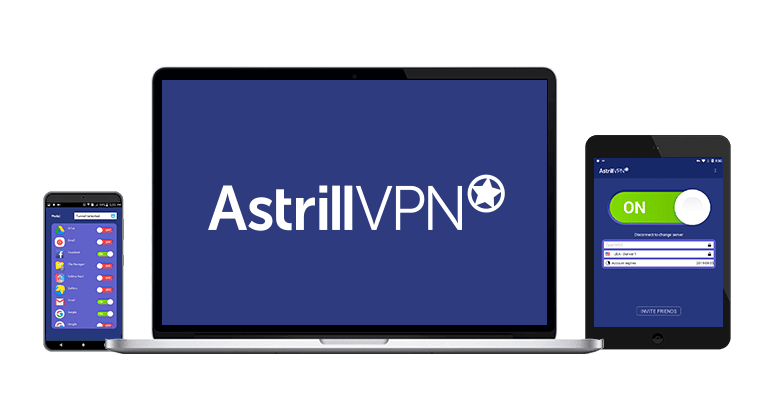
Astrill VPN works in China thanks to its StealthVPN protocol, which hides your VPN traffic from your Chinese ISP and government. It also features Smart Mode (in Settings), which uses regional IP addresses to make sure your IP doesn’t get blocked — it also helps you maintain the best speeds for apps like Vimeo and Dropbox.
- Optimized servers for China
- Smart Mode avoids IP blocks
- Supports custom browser routing
- Pretty pricey
- Only 5 connections
Astrill VPN has Supercharged servers optimized to work in China, including in the US, Hong Kong, Japan, and more. These servers are marked in the app, so you won’t have trouble finding them, and they provide good speeds with obfuscation.

I also like how Astrill VPN allows you to route all of your traffic through port 433 on the OpenWeb protocol in China, in case the StealthVPN protocol doesn’t work. You can further customize your connection by sending your traffic through a specific browser if you have one that you use for uncensored browsing in China.
Astrill VPN has servers in Taiwan, Hong Kong, Singapore, and Japan. While it accesses most top streaming services, ExpressVPN is a better pick, as it works with 100+ sites.
Astrill VPN accepts UnionPay, PayPal, credit/debit card, and even cryptocurrencies like Bitcoin or Monero.
Bottom Line:
Astrill VPN works in China because of its StealthVPN obfuscation protocol and Smart Mode, which both work to make sure all of your VPN traffic remains undetected. Astrill has optimized servers for China that offer good speeds with obfuscation, let you customize your connections, and can access top streaming sites.
Read our full Astrill VPN review
5. TunnelBear — Great China VPN for Beginners


12-month plan: $4.99 / month
1-month plan: $9.99 / month
TunnelBear is a user-friendly VPN that works very well in China. It has an easy-to-use obfuscation tool (GhostBear) that you can enable with a single click in the Settings menu under Connection. Even easier, you can just set it to Auto, so it works automatically when needed, similar to ExpressVPN.
- Fun and easy to use
- Easy auto-obfuscation setting
- Good free plan for China
- No obfuscation on iOS
- No money-back guarantee
GhostBear makes it hard for the Chinese government’s DPI technology to detect and block your traffic. That said, it’s a shame that GhostBear isn’t available on iOS (or the latest version of the macOS app) — all of the other VPNs on this list offer obfuscation for iOS. However, you can manually select the OpenVPN protocol on iOS, which is more resistant to censorship than other protocols (TunnelBear recommends doing this for all restrictive countries, including China).

TunnelBear includes full leak protection, a no-logs policy, and an Encrypted Server Name Indication (ESNI) feature for Android — it encrypts the SNI field, which reveals the server your device is trying to connect to, making it harder for the Great Firewall to block your VPN traffic.
TunnelBear has servers in Taiwan and Japan, as well as a Fastest server option, which connects you to the fastest server based on your location. It’s pretty good for streaming and can access Netflix and Amazon Prime.
TunnelBear has a free plan you can try in China with only 2 GB available per month to test out the product.
Bottom Line:
TunnelBear is very user-friendly and intuitive to use in China, making it a particularly good option for beginners. It comes with an obfuscation feature that avoids DPI technology, good security and privacy features, as well as great streaming support. TunnelBear has a free option with a 2 GB limit per month.
Read our full TunnelBear review
Bonus. VyprVPN — Secure China VPN


VyprVPN provides strong security features so you can safely browse the web in China. It uses its proprietary Chameleon protocol that disguises OpenVPN packet metadata to evade China’s DPI.
- Fast speeds with Chameleon
- Auto IP rotation feature
- Optimized servers for China use
- Inconsistent live chat support
- Only 5 connections
It combines Chameleon with Smart IP, a feature that regularly changes your IP address without disconnecting you from the VPN — this helps you avoid IP blocks in China. I like how Smart IP is automatically enabled, like ExpressVPN’s obfuscation.

VyprVPN has servers it recommends using when in China, which are optimized to work while using Chinese ISP networks. They’re in Australia (Perth), South Korea, Japan, Los Angeles, Austin, and Hong Kong. Its servers can access 45+ streaming sites, including Netflix, Amazon Prime, and DAZN.
It even comes with VyprDNS, which makes your connection extra secure by routing your DNS requests through VyprVPN’s system instead of your ISP. I especially like that you can keep the kill switch active even after closing the VyprVPN app, so you don’t accidentally go online unprotected.
VyprVPN accepts UnionPay and AliPay.
Bottom Line:
VyprVPN is a decent option for securely browsing and streaming in China. Its Chameleon proprietary protocol masks your VPN traffic and its Smart IP tool regularly changes your IP address so the Great Firewall won’t be able to block it.
Quick Comparison Table
Editor's Note: Intego ONE, Private Internet Access, CyberGhost and ExpressVPN are owned by Kape Technologies, our parent company.
Testing Methodology: Comparison & Ranking Criteria
I followed our rigorous testing methodology to make sure that I only recommend VPNs that actually work in China, maintain stable connections there, and offer decent speeds. To do this, I ran several real-life scenario tests. Here’s a detailed breakdown of the methodology I used to pick and rank the VPNs on my list:
- I made sure you can access every VPN from China via a mirror link. The VPN providers on my list have email support you can connect to while in China to get a mirror link for their website to purchase and download the VPN from China.

- I looked at security and privacy features. The VPNs on my list use military-grade 256-bit AES encryption that prevents keyword and website blocking, a kill switch that protects you from exposing your online activities to your ISP in China, and no-logs policies, ensuring it can’t share information with the Chinese government.
- I made sure the VPNs offer obfuscation. China uses DPI to detect and block VPN traffic, even if it’s encrypted. Obfuscation disguises VPN data to look like normal internet use, helping you stay undetected by the Great Firewall. All the VPNs I recommend have this feature, and I tested it to make sure it works well without slowing things down too much.

- I checked that the VPNs’ mobile & desktop apps work in China. I tested the desktop and mobile apps for each VPN to ensure that their obfuscation features are easy to enable for anyone who wants to freely browse the web in China — some of them (like ExpressVPN) automatically turn them on when they detect a restrictive network.
- I confirmed value for money. I compared pricing plans, extra features like split-tunneling, and the number of simultaneous connections allowed. I also checked for a money-back guarantee, which allows you to try the provider risk-free.
VPN Not Working in China? Try These Troubleshooting Tips
Wait for the VPN Connection to Be Established

It typically takes around 2–3 seconds for the VPN to establish a connection to the server, but if your speeds in China are slower, you may have to wait for 30–60 seconds for your VPN to establish a connection.
Make Sure You Have the Obfuscation Feature Enabled

Different VPNs use different obfuscation features. Some, like ExpressVPN, automatically obfuscate your servers when they detect VPN blocks and restrictions. With others, however, you have to find the feature that obfuscates your traffic and enable it. Most VPNs also require you to use the OpenVPN protocol for the obfuscation to work.
Switch to Recommended Servers

Some VPNs have recommended servers for China, which are optimized for reliability and speed. While specifics may vary, most VPN providers offer similar recommendations or have servers that perform well in restrictive regions.
Click here to read more troubleshooting tips
Secure a New IP Address

If you’re encountering blocks, it might be due to China’s firewall targeting the VPN’s IP address you’re using. Reconnecting to your VPN can assign you a new IP, often circumventing the immediate block.
Note that you may need to attempt multiple connections or switch between different servers to find one that works.
Consider Using OpenVPN TCP Protocol

Using the OpenVPN TCP protocol over TCP port 443 makes it less likely for ISPs in China to block your VPN traffic. This port is used for secure HTTPS web traffic, which is essential for most online services, and blocking it would mean no Chinese internet users could access Chinese sites that use HTTPS.
Check the Kill Switch & Leak Protection Settings

Make sure that your VPN’s kill switch and DNS/IPv6 leak protection features are enabled. The kill switch halts all internet traffic if your VPN connection drops, avoiding any data leaks. DNS/IPv6 leak protection ensures that even during connection issues, your device doesn’t default to using your real, Chinese IP address for DNS requests.
Clear Your Browser’s Cache & Cookies

Websites can use your cache and cookies to detect your actual location, potentially overriding your VPN. Clearing these before connecting to the VPN can help keep your real location hidden.
Reach Out to Customer Support
If all else fails, contact your VPN’s customer support. If your VPN’s site is blocked and you can’t reach out to the live chat reps, you can contact them via email. All of the VPNs I recommend here provide email support and have knowledgeable reps.
Quick Tips for Using a VPN Safely in China
Given China’s strict internet controls and advanced VPN detection, simply clicking “connect” isn’t enough to stay secure. To avoid blocks and leaks, you need to take extra precautions when setting up and using your VPN. Here’s how to maximize your safety:
Enable Obfuscation
China’s Great Firewall actively detects and blocks VPN traffic, but obfuscation (also called stealth mode) disguises it as regular internet activity. Many premium VPNs offer this feature under names like “Stealth VPN” or “Camouflage Mode.” Always enable it to make your VPN connection harder to detect and block.
Always Use the Kill Switch
If your VPN disconnects unexpectedly, your real IP address and traffic could be exposed. A kill switch prevents this by instantly cutting off your internet connection until the VPN reconnects. Make sure this feature is turned on in your VPN settings to avoid accidental leaks.
Choose a Secure Protocol
Not all VPN protocols work well in China. Avoid outdated options like PPTP or L2TP, as they are insecure and easily detected. Instead, use WireGuard, OpenVPN, or IKEv2 for strong encryption and better reliability. If your VPN offers a stealth protocol, such as OpenVPN with obfuscation, that’s the best choice for bypassing restrictions.
Click here for more tips for using a VPN in China
Use a No-Logs VPN
Choose a reputable VPN provider that follows a strict no-logs policy. This ensures that even if your VPN is compromised or pressured by authorities, there are no records of your online activity.
Disable IPv6 and Use DNS Leak Protection
China’s network can sometimes bypass VPN encryption through IPv6 or DNS leaks. Most VPN apps allow you to disable IPv6 and enable DNS leak protection—make sure both are turned on to prevent accidental exposure.
Avoid Free VPNs
Most free VPNs don’t have the security, obfuscation, or reliability needed to work in China. Worse, some log and sell your data. Stick to paid, trusted VPNs that are known to bypass the Great Firewall.
Use a Multi-Hop (Double VPN) Connection If Possible
Some VPNs offer multi-hop connections, which route your traffic through two encrypted servers instead of one. This adds an extra layer of security, making it even harder for surveillance systems to track you.
Download Everything Before Entering China
China actively blocks VPN websites, so it can be difficult (or impossible) to download or update your VPN once you’re there. Install your VPN and any backup options before you arrive.
Consider a Backup VPN
Even the best VPNs can get blocked at times. It’s smart to have a second VPN installed, preferably one with stealth features, in case your primary VPN stops working.
Why You Should Use a VPN in China
China has an extremely regulated internet, so services, websites, and access to information are strictly controlled. Regional censorship strength has increased, most notably in Henan province, where blocks are much more aggressive. Here are the top reasons why a VPN is essential if you’re living in or traveling to China:
Ensure Public Wi-Fi Protection
Public Wi-Fi spots, whether in cafes or airports, are often targeted by hackers. And in China, this might also include government surveillance programs trying to monitor your online behavior or infiltrate your devices. A VPN provides a secure, encrypted tunnel for your internet connection, shielding you from these cyber threats. This is particularly useful if you’re handling sensitive data or conducting important online transactions.
Free Speech
China’s tight internet regulations make it risky to voice dissenting opinions online. But with a VPN, you can mask your IP address, allowing you to express your views openly and anonymously. Your online activities get encrypted, which means you don’t have to be constantly worried about surveillance or facing repercussions for sharing your thoughts and beliefs.
Private Conversations
In China, you may have concerns about the privacy of your conversations online. A VPN encrypts your data, making it difficult for anyone (including governments and hackers) to snoop on your communications. This means you can chat, conduct VoIP calls, email, and share files without worrying too much about someone eavesdropping on you.
Download Torrented Files Safely
Torrenting and Tor networks are subject to scrutiny and restrictions in China. By hiding your real IP address, it becomes exceedingly difficult for anyone to trace your online activities back to you. This offers a layer of anonymity that can be especially valuable for downloading torrents or accessing restricted networks.
Stream Securely
VPNs can change your IP address, making it possible to access top streaming services like Netflix from China. Since they encrypt your traffic and those who work in China also obfuscate it, streaming with a VPN from China is very secure and private.
Top Brands that Didn’t Make the Cut:
- NordVPN. NordVPN is a top VPN with lots of industry-standard security features and cool extras. While it has dedicated obfuscated servers, they don’t work in China.
- CyberGhost VPN. CyberGhost VPN is a great, easy-to-use VPN with specialized torrenting and gaming servers. It even has servers in China, but it only maybe works in that country.
- Proton VPN. Proton VPN is an excellent VPN option with high-privacy features. However, even though the VPN provides obfuscation, there’s no guarantee it works in China.
Frequently Asked Questions
Do VPNs work in China?
Most VPNs don’t work in China. This is because the Chinese government has banned all unapproved VPNs and made a strong effort to block their traffic.
Government-approved VPNs are not great for security, however, as they are forced to give the government backdoor access. Fortunately, there are still some secure VPNs that work in the country, such as ExpressVPN. It also provides blazing-fast speeds and has excellent privacy and security features, making it the #1 VPN for China.
What is the best VPN for China?
ExpressVPN is my top pick for bypassing China’s firewall in 2026 for both mobile and desktop use. It works well in China on Android, iOS, Windows, macOS, and Linux, it’s fast, it comes with excellent security features, and it has a very user-friendly interface.
How do I use a VPN in China?
Bypassing China’s firewall with a VPN requires only 3 steps:
- 1. Get a reputable VPN before traveling to China. I recommend ExpressVPN because it works in China and offers the fastest speeds on the market.
- 2. Download and install the VPN. This process should only take a few minutes — just follow the installation wizard’s instructions.
- 3. Connect to a server. Open the app and select a nearby server for the fastest possible speeds. If that doesn’t work, pick one of ExpressVPN’s recommended servers for China. That’s it! You can now freely and securely browse the web in China.
Can I use a free VPN for China?
China’s firewall blocks most free VPNs and many of the paid ones, so you’re not likely to find a free VPN that works there. Even if you do, free VPNs are typically slow and usually set a limit on your data.
The best option is to purchase a reasonably-priced VPN that will allow you to safely and securely browse the web in China with no restrictions. My top recommendation is ExpressVPN since it offers access to the free internet in China, provides very fast speeds, and is ultra secure.
Which country should I connect to in China?
It’s typically best to connect to a server in a nearby country, such as Japan or Singapore, as you’ll get the fastest possible speeds. That said, some VPNs have special server locations optimized to work well in China, and if your provider has a list of these, it’s best to try them first. If your VPN is not working properly, follow these troubleshooting steps.
Is it legal to use a VPN in China?
The legality of VPNs in China is a gray area. Technically, China only allows using authorized VPNs — all of these VPNs have agreed to share user data with the Chinese government, so they won’t protect your privacy like the VPNs I recommend here. Also, many of these VPNs have to follow the restrictions set out by the Chinese government, so you won’t get access to the free web.
The good news is that authorities in China mostly target individuals who share or sell unauthorized VPNs and not those who use VPNs to get around restrictions. However, it’s crucial to stay informed about the current regulations and exercise caution, understanding the risks involved in using VPNs not sanctioned by the government.
Can I download a VPN in China?
Yes, but you’ll have to jump through hoops, as many VPN providers’ websites are blocked in China. Since 2023, the Chinese government has required all apps — especially VPNs — to get approval from the Ministry of Industry and Information Technology (MIIT) before being listed. As a result, popular VPNs are no longer available in mainland China’s app stores, including the Apple App Store and the (already blocked) Google Play Store. This is why it’s best to download and set up your VPN before you visit China.
If you’re already in China without a VPN, some workarounds to get a VPN include using a mirror site, which you can get by emailing your VPN provider or asking someone outside of China to send you the VPN installer via email or a cloud-sharing service.
What should I do if my VPN connection is unstable in China?
If your VPN keeps disconnecting or slowing down, try these fixes:
- Switch Servers. Connect to a different server, preferably one optimized for China. Some VPN providers list recommended servers for bypassing the Great Firewall.
- Change Protocols. Try switching to WireGuard, OpenVPN (with obfuscation), or IKEv2, as some protocols work better than others in China.
- Enable Obfuscation. If your VPN has a stealth or obfuscation mode, turn it on to help disguise your VPN traffic.
- Check for DNS or IP Leaks. Some connections fail due to leaks. Enable DNS leak protection and disable IPv6 in your VPN settings.
- Reconnect to a Different Network. If you’re on public Wi-Fi, try using mobile data or another Wi-Fi network to see if the issue is network-specific.
- Update Your VPN App. If possible, make sure you’re using the latest version of your VPN software, as updates often include fixes for bypassing restrictions.
What sites are blocked in China?
China blocks thousands of websites and services, including popular platforms used worldwide. Here are some of the most notable:
- Social Media & Messaging: Facebook, Instagram, Twitter, LinkedIn (full international), TikTok (foreign versions), WhatsApp, Telegram, Discord, Reddit.
- Search Engines & News: Google (and all its services like Gmail and Google Drive), Wikipedia, major international news sites like BBC and The New York Times, and censorship watchdogs.
- Streaming & Entertainment: YouTube, Netflix, Twitch, Spotify.
- Cloud Services & Work Tools: Dropbox, OneDrive, Google Docs, Slack.
- VPN Websites: Most VPN provider websites are blocked, making it difficult to download or update a VPN while in China. Always install and configure your VPN before arriving.
The list changes over time as China continuously updates its censorship policies. If you’re traveling to China, it’s best to check a current blocklist and prepare accordingly.
Editor's Note: ExpressVPN and this site are in the same ownership group.


